Focus & Productivity
Time Blindness: When 'Five More Minutes' Becomes Two Hours
NIVORA Editorial · October 6, 2026 · 6 min read
Time you cannot feel
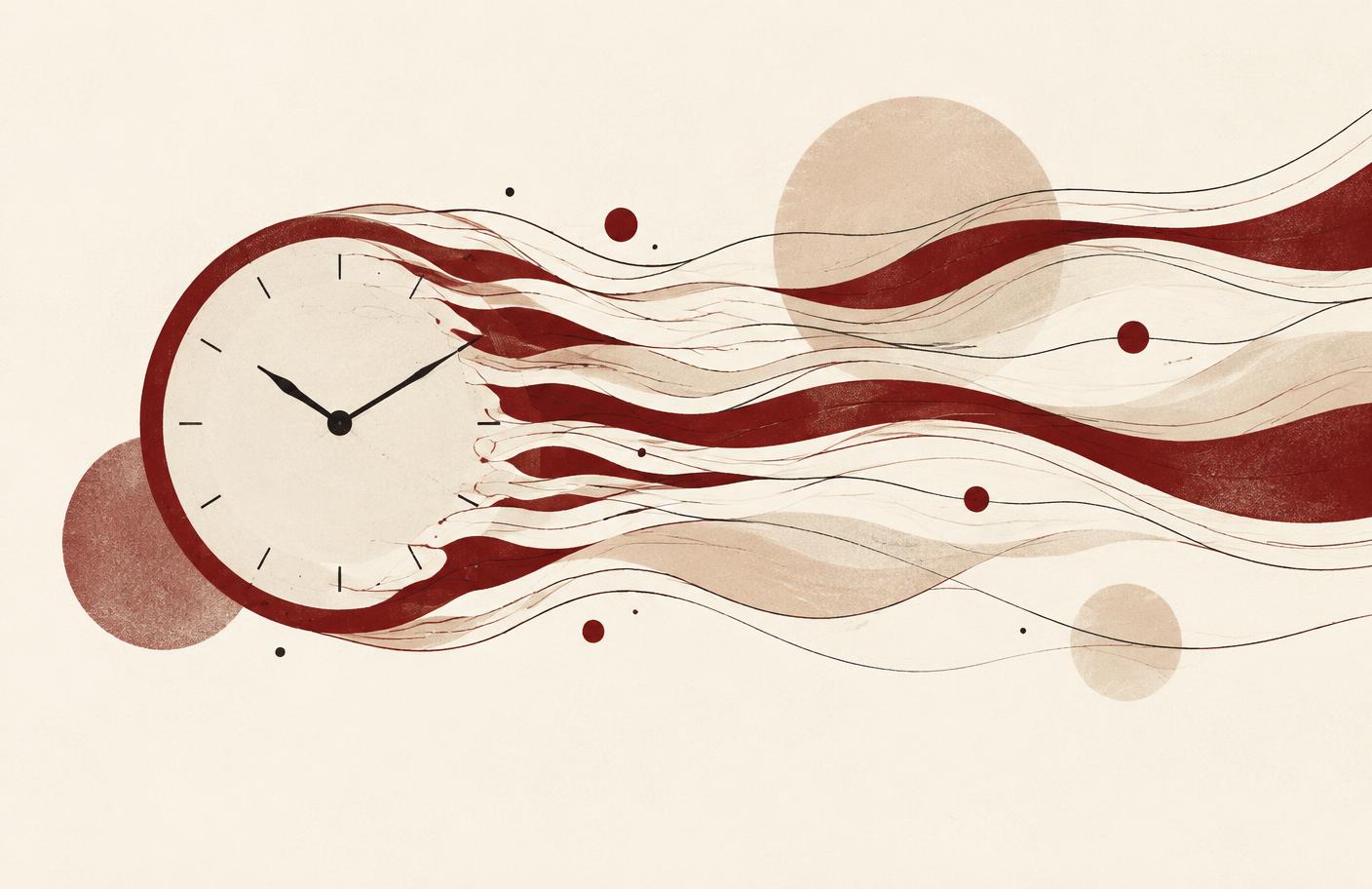
Most planning advice assumes you can sense time passing. For many adults with attention challenges, that sense is unreliable. Five minutes and fifty minutes can feel identical from the inside — until the clock is checked.
This is often called time blindness. It is not an excuse; it is a difference in perception, and it explains a whole category of lateness, overruns, and lost afternoons.
How time blindness shows up
The pattern is usually consistent, which makes it easy to work with once it is named.
- You estimate tasks at 20 minutes and they reliably take an hour.
- Hyperfocus swallows entire blocks of time without warning.
- Transitions take longer than expected, so every departure runs late.
- Deadlines feel abstract until they are suddenly urgent.
“You cannot manage what you cannot feel. First make time visible — then it becomes plannable.”
Make time visible again
Analog tools help because they show time shrinking: an analog clock on the wall, a visual timer on the desk, a task list with time blocks you can physically see.
Then pad your estimates honestly. If a task usually takes an hour, book seventy-five minutes. The goal is not to be optimistic — it is to stop building a schedule that guarantees failure.
From self-blame to structure
If time always seems to slip, the answer is not more guilt. It is better scaffolding: external clocks, realistic buffers, and one visible anchor for each part of the day.
Time management is one of the five dimensions in a focus profile. Knowing whether time, attention, or follow-through is your weakest link changes which tool will actually help.